Michelangelo began in Florence: first in Ghirlandaio's workshop, then among the sculpture and ideas gathered around Lorenzo de' Medici. Rome brought the early Pieta; Florence brought David. In both, the body carries thought, tension and character before it becomes an emblem.
The tomb of Julius II, the Sistine ceiling, the Medici projects, the Last Judgment and St Peter's stretched that ambition across sculpture, painting and architecture. Letters show the less monumental life running beneath them: money, family, patrons, delays, labor and obligation. The poems return repeatedly to art, love, faith and mortality.
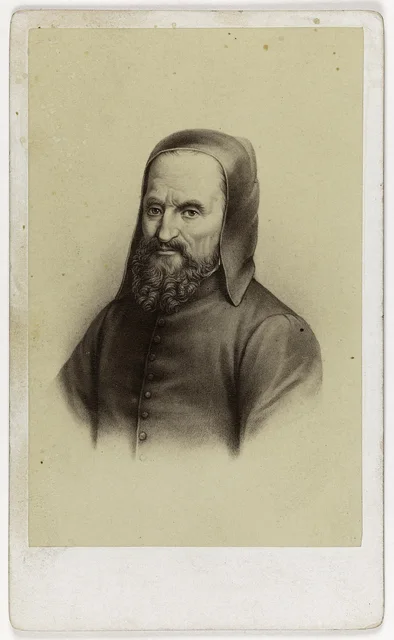
A life in dates
Born in Caprese; apprenticeship in Florence
Michelangelo was born in Caprese in 1475. The Prado records that in 1488 he was apprenticed to the Florentine painter Domenico Ghirlandaio.
Museo Nacional del PradoRome and the Pieta commission
He went to Rome in 1496. Saint Peter's dates the Pieta to 1498 and identifies its patron as the French cardinal Jean de Bilheres Lagraulas, who commissioned it for his tomb in the Chapel of the King of France in the old basilica.
St. Peter's BasilicaDavid
The Italian national cultural-heritage catalogue dates the marble David to 1501-1504. It records that the reused block was entrusted to Michelangelo in 1501 and that the statue was moved to Piazza della Signoria in May 1504.
Catalogo generale dei Beni Culturali, ItalyThe tomb of Julius II
Michelangelo was summoned to Rome in 1505 to begin a sculpted tomb for Pope Julius II. The repeatedly altered project occupied him until 1545.
National Gallery, LondonSistine Chapel ceiling
Michelangelo signed the ceiling contract on 8 May 1508. The Vatican Museums records completion by 31 October 1512, before Julius II celebrated Mass in the chapel on 1 November.
Vatican MuseumsThe Last Judgment
The Last Judgment was executed on the Sistine Chapel's altar wall from 1536 to 1541, under Pope Paul III, after an earlier commission from Clement VII.
The Holy SeeSt. Peter's and the dome
The Prado places Michelangelo in charge of rebuilding St. Peter's from 1546. Saint Peter's records construction of the dome under his direction from 1547; it was completed after his death by Giacomo della Porta and Domenico Fontana.
St. Peter's BasilicaDeath in Rome and return to Florence
Michelangelo died in Rome on 18 February 1564. His remains were brought to Florence, where his monumental tomb was installed in Santa Croce.
Opera di Santa Croce