Virgin and Child with Saint Anne
by Leonardo da Vinci
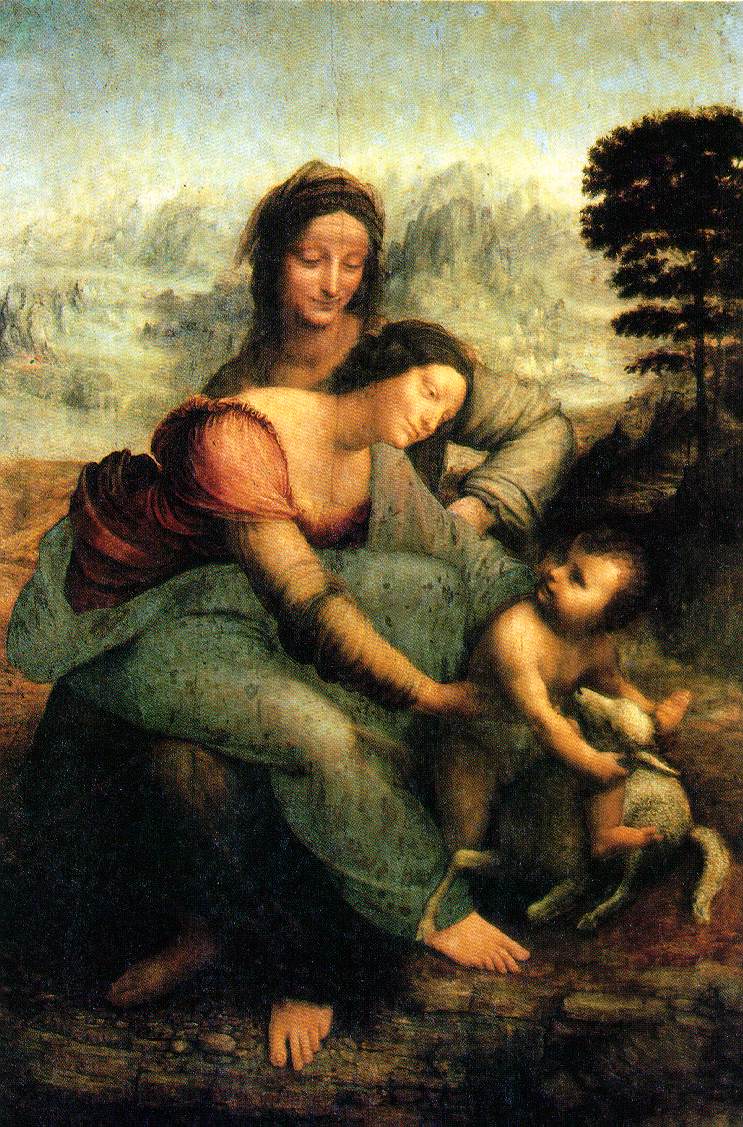
The Virgin and Child with Saint Anne - Musee du Louvre, Paris
The Controversial Restoration
A 1994 cleaning attempt was abandoned due to fears of sfumato damage. The 2009–2012 restoration, approved by Louvre keeper Vincent Pomarède, sparked major controversy when Ségolène Bergeon Langle (former national director of conservation) and Jean-Pierre Cuzin (former keeper of paintings) both resigned from the advisory committee, claiming restorers removed Leonardo's own glazes — particularly on the infant's body — mistaking original material for later repaints. Jacques Franck joined the criticism. Other experts (including Pietro Marani) defended the restoration. The painting was unveiled in a 2012 exhibition.
Hidden Sketches On The Reverse
In 2008, infrared reflectography revealed three faint sketches on the back of the panel: a horse's head (linked to Battle of Anghiari preparatory studies), a half-skull, and an infant Jesus with lamb — identified as "very probably" by Leonardo.
Freud'S Famous Misreading
In his 1910 essay, Freud claimed Mary's garment revealed a vulture shape — a manifestation of Leonardo's childhood fantasy. This was based on a mistranslation: Leonardo wrote about a kite (nibbio), not a vulture. The German translator of the Codex Atlanticus made the error. Freud was devastated, calling his Leonardo essay "the only beautiful thing I have ever written."
Research & Analysis
The Burlington House Cartoon: The National Gallery's cartoon (charcoal and chalk on 8 sheets of glued paper) shows a different composition with John the Baptist instead of the lamb. Dating is disputed: c. 1499–1500 (National Gallery) versus c. 1506–1508 (majority of modern scholars including Kemp). It shows no evidence of transfer (pricking or incising), suggesting it was kept as a finished artwork.